You Are The Voice
- David Martins

- Aug 29, 2020
- 5 min read
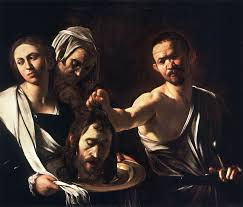
Today the Church celebrates the Memorial of the Beheading of John the Baptist. It is perhaps providential that this celebration fall the day after we celebrated Saint Augustine, for the two have a profound connection that is often overlooked.
Saint Augustine writes:
“John is the voice, but the Lord is the Word who was in the beginning. John is the voice that lasts for a time; from the beginning Christ is the Word who lives forever. Take away the word, the meaning, and what is the voice? Where there is no understanding, there is only a meaningless sound. The voice without the word strikes the ear but does not build up the heart. However, let us observe what happens when we first seek to build up our hearts. When I think about what I am going to say, the word or message is already in my heart. When I want to speak to you, I look for a way to share with your heart what is already in mine. In my search for a way to let this message reach you, so that the word already in my heart may find a place also in yours, I use my voice to speak to you. The sound of my voice brings the meaning of the word to you and then passes away. The word which the sound has brought to you is now in your heart, and yet it is still also in mine.”[i]
John himself made the distinction between he and Jesus clear in his announcement that one would come after him “whose sandal he was not worthy to untie.” Augustine likewise acknowledges this important distinction, but also highlights their important relationship. He also hints that John the Baptist is a prefigurement of the Priesthood.
In his reflection entitled “The Ministry and Life of Priests”, Joseph Cardinal Ratzinger makes this claim directly, and further reflects:
“Ultimately the task of the priest is quite simply to be a voice for the word: ‘He must increase, but I must decrease’- the voice has no other purpose than to pass on the word; it then once more effaces itself. On this basis the structure and the humbleness of priestly service are both equally clear: the priest is, like John the Baptist, purely a forerunner, a servant of the Word. It is not he who matters, but the other. Yet he is, with his entire existence, vox; it is his mission to be a voice for the Word, and thus, precisely in his being radically referred to, dependent upon, someone else, he takes a share in the stature of the mission of the Baptists and in the mission of the Logos himself.” [ii]
Powerful, beautiful words: the priest in his very being, is radically referring to, and dependent on, Jesus. Everything about him is a signpost to the kingdom, and it’s King who is the word. Ratzinger says that when the voice is done announcing the word “it then once more effaces itself.” The voice is gone, but the word remains forever spoken.
As we look back over our lives and consider the priests who have impacted us many of them have passed on from our lives, either through a new ministry or going home to the Lord himself, but that living word that they spoke lives forever in our hearts. Hopefully that word was the Good News of Jesus Christ, risen from the dead to now live forever. As I think back over the years I remember many priests who did precisely that, and that living Word that IS Jesus became more and more alive for me over and over again. I would remind my readers who share in the dignity of the Priesthood: with great power comes great responsibility.
It is perhaps the greatest of all misfortune when the voice speaks a different word. This happens when the tone of the voice is not one of conviction, truth, and love, but rather a tone of judgement, arrogance, or fear. We recently saw in the news the consequences of what happens when the Priestly voice speaks its own words in the celebration of the Sacrament. We shook our heads and waved a critical finger, but are we equally as concerned about the use of our Priestly voice when we go to correct someone. Do we speak the truth with love?
This reminder is good to each and every one of us, because by our Baptism we all share in the living reality of Christ who is priest, prophet, and king. As we all exercise our share in the priesthood of all believers, do we speak that Word with a voice of love and empathy? As November moves closer and closer we all see so many voices in our Social Media Newsfeeds announcing what each voice believes to be the truth of the Word. We hear some voices saying things like, “You can’t be Christian and support Donald Trump!” We likewise hear the voices that say, “You can’t be Catholic and support Joe Biden.” These voices frequently collide, and soon we are deleting and blocking people whose views are different then ours...but not before a lengthy thread of comments that grow more and more angrily aggressive. A word that is divisive is never the Living Word. A voice whose tone contains no love is not the voice of the Baptist. John the Baptist was a man of conviction, whose commitment to the truth would cost him his life. However his words were not colored by hatred, anger, arrogance, or an intention to divide.
In this morning’s Gospel we were told the tragic tale of how John’s preaching would cost him his head. The story told us of a drunken party at Herod’s house, and a promise to Heordias’ daughter. Consider the words that the Evangelist tells us: “Herod feared John, knowing him to be a righteous and holy man, and kept him in custody. When he heard him speak he was very much perplexed, yet he liked to listen to him” (Mark 16:20). How does this happen? John spoke out directly against Herod for marrying his own brother’s wife, and yet the text tells us that Herod “liked to listen to him.” Who likes listening to the person who corrects us? That would seem to indicate something to us about the nature of John’s voice. It was direct and convicted, and yet inviting. He stood by the truth, but always with love. He stated the truth and simply moved on, standing by that truth always…a far different approach then the keyboard warriors of Facebook these days.
As we commemorate the death of John the Baptist today – on the heels of the great Doctor of the Church, Saint Augustine – may each and every one of us find in his story a reminder of our own role in building the kingdom of God on earth. As John was the voice that announced the Word, may we be the same! May we live our priesthood – whatever our share in it is- always with conviction, but also always with love. The spoken word remains long after the voice is gone, and in our case the Word that was made flesh remains forever in the Eucharist. A wise man makes sure he knows his words well before he speaks them: may we all tune our voice by drawing near to its word in the Sacrament we share.
__________________________________


Comments